


May 13, 2026
Survival Knife Guide: What to Look For When Your Life Depends on the Blade
October 20, 2025Karambit Knife: Origins, Design, and Why This Curved Blade Endures
January 12, 2026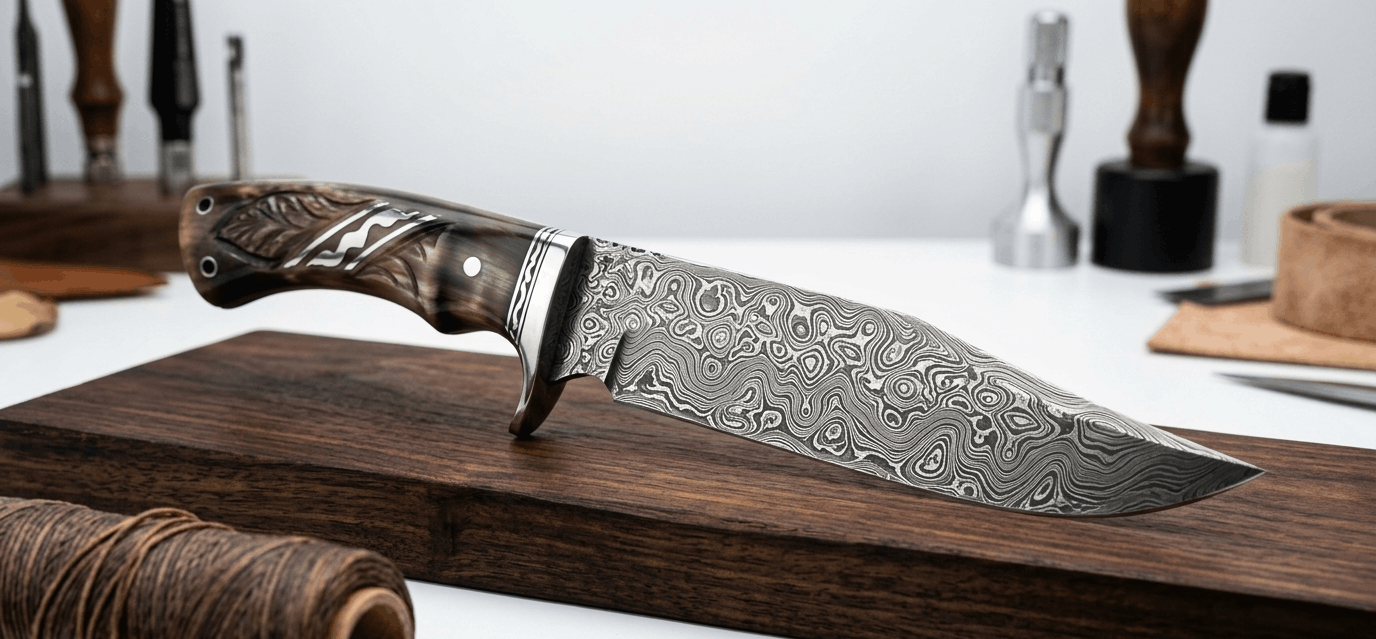
The Origin Story: Jim Bowie and the Sandbar Fight
The Bowie knife's legend begins with James "Jim" Bowie, an American pioneer who rose to fame at the Sandbar Fight of 1827 near Natchez, Mississippi. Armed with a large, fixed-blade knife designed by his brother Rezin Bowie, Jim Bowie survived what should have been a fatal encounter — and the blade became famous overnight. Blacksmith James Black later refined the design into the pattern we recognize today: a long clip-point blade, a crossguard to protect the hand, and a heavy spine built for both combat and utility. By the mid-19th century, demand for Bowie knives had spread across America and even reached Sheffield, England, where manufacturers exported thousands of blades bearing patriotic American slogans.
The Legendary Bowie Knife: History, Uses & Buying Guide
Few blades carry the mythic weight of the Bowie knife. Born on the American frontier, battle-tested through the 19th century, and still coveted by collectors and outdoorsmen today, the Bowie knife is the quintessential American blade. Whether you're a hunter, a history enthusiast, or a knife collector seeking a handcrafted masterpiece, understanding what makes a Bowie knife truly exceptional is the first step toward owning one.
Choosing a Handcrafted Bowie Knife: What to Look For
The Bowie knife was designed to do everything, and it still excels in a wide range of tasks. Hunters prize it for field dressing and skinning game — the curved clip bevel works superbly for removing hide, while the straight lower edge handles meat cutting cleanly. Campers and outdoor adventurers use it for batoning wood, preparing food, clearing brush, and general camp tasks. In a survival scenario, a quality Bowie knife becomes an indispensable multi-tool. Collectors, of course, value it as a work of art — especially handmade Damascus Bowie knives, which can display stunning wood-grain patterns across hundreds of steel layers.
Anatomy of a Classic Bowie Knife
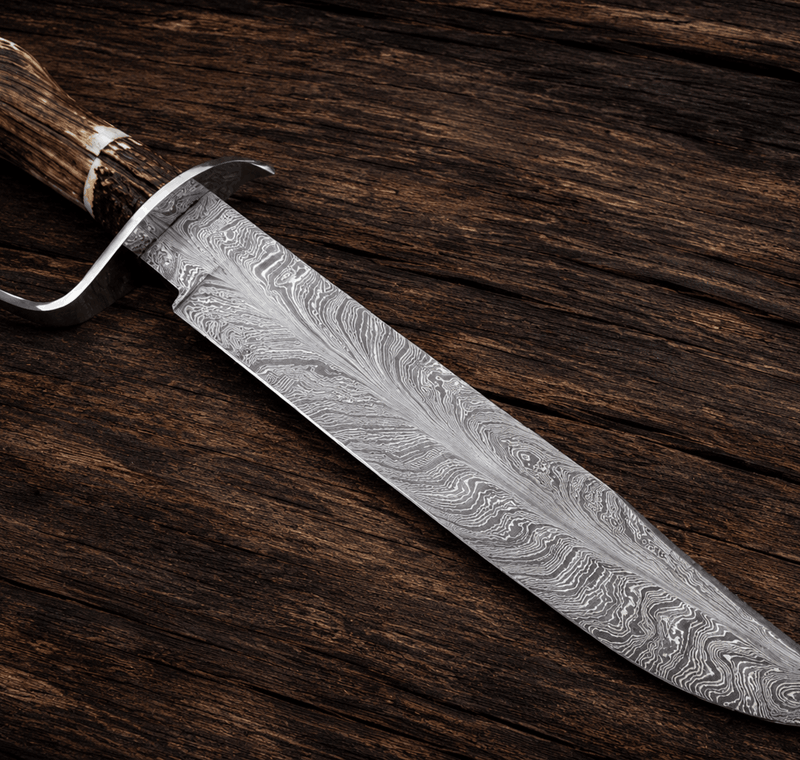
A true Bowie knife is defined by several unmistakable features. The blade typically measures between 8 and 12 inches, though some historic examples exceeded 15 inches. The clip point — a concave cut near the tip of the spine — creates a razor-sharp, slender point ideal for piercing and detailed work. The false edge along the clip adds a secondary cutting surface. A full crossguard protects the hand during heavy use, and the handle, traditionally crafted from stag horn, bone, or hardwood, provides a secure grip. Modern custom Bowie knives often use premium Damascus steel or high-carbon steel for the blade, combining historic aesthetics with cutting-edge metallurgy.
The Bowie knife was designed to do everything, and it still excels in a wide range of tasks. Hunters prize it for field dressing and skinning game — the curved clip bevel works superbly for removing hide, while the straight lower edge handles meat cutting cleanly. Campers and outdoor adventurers use it for batoning wood, preparing food, clearing brush, and general camp tasks. In a survival scenario, a quality Bowie knife becomes an indispensable multi-tool. Collectors, of course, value it as a work of art — especially handmade Damascus Bowie knives, which can display stunning wood-grain patterns across hundreds of steel layers.
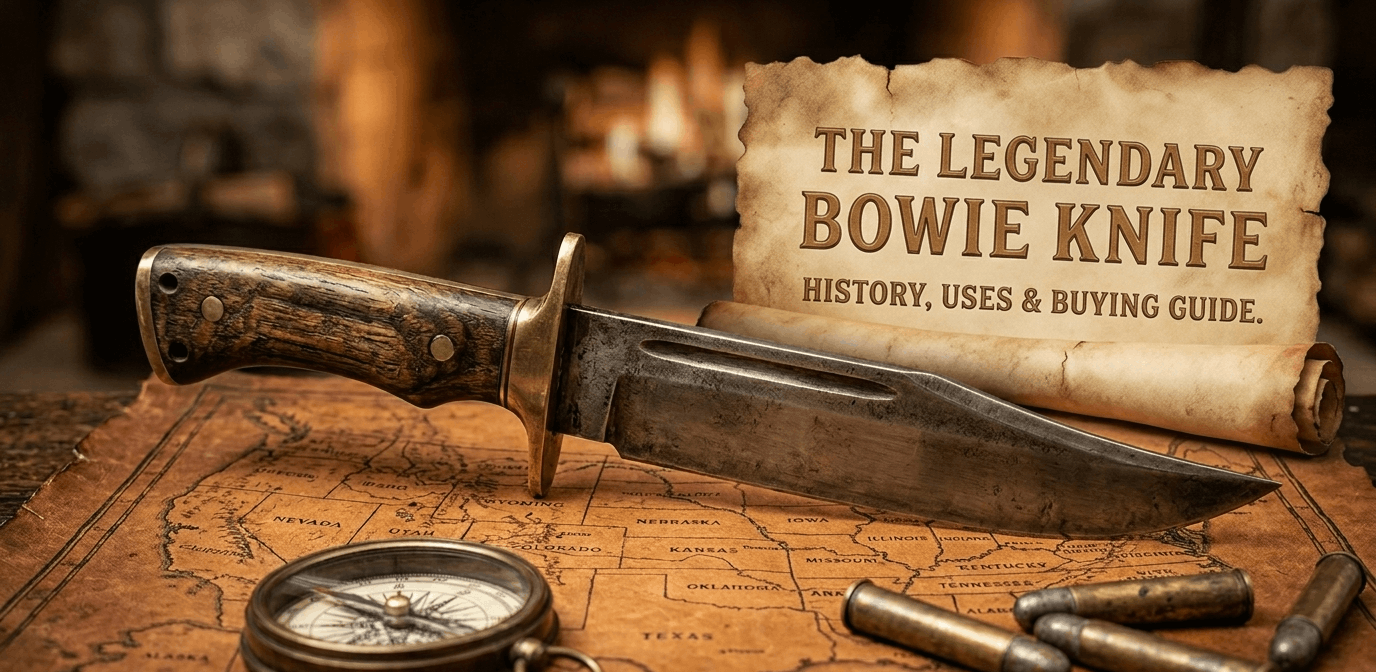
When investing in a quality Bowie knife, steel choice is paramount. High-carbon Damascus steel — created by folding and forge-welding multiple steel types — offers excellent edge retention and a distinctive visual pattern. Look for a Rockwell Hardness (HRC) rating between 55 and 60 for the ideal balance of toughness and sharpenability. Handle material matters too: stabilized wood, G10, and natural bone or horn each offer unique aesthetics and grip characteristics. Ensure the blade-to-handle junction features a full tang construction, meaning the steel extends all the way through the handle for maximum strength. A well-fitted leather sheath completes the package, protecting both the blade and the carrier.
Why American-Made Bowie Knives Stand Apart
The Bowie knife is a uniquely American legacy. Choosing a handcrafted, American-made Bowie knife means supporting a tradition of craftsmanship that dates back nearly 200 years. Independent bladesmiths who hand-forge each blade bring a level of attention and artistry that mass-produced knives simply cannot replicate. Every weld, every grind, and every handle fit is executed with intention — producing a blade built to last generations. If you're looking for a Bowie knife that combines historical authenticity, superior materials, and genuine craftsmanship, exploring the work of American bladesmiths is the best place to start.
Custom Damascus Hunting Knife | Personalized Outdoor Tool
Original price was: $225.00.$199.00Current price is: $199.00.Classic Brown Handle Bowie Knife | Rugged Outdoor Blade
Original price was: $210.00.$190.00Current price is: $190.00.Fixed Damascus Steel Bowie | Professional Grade Hunter
Original price was: $240.00.$210.00Current price is: $210.00.
The Bowie knife is more than a tool — it is a piece of American heritage forged in steel. Whether you seek it for the field, the collection cabinet, or simply to own a blade with a story worth telling, a handcrafted Bowie knife is an investment you won't regret. Explore our curated selection of custom Bowie knives, each made with the same dedication to quality that Jim Bowie himself would have demanded.
Author : John Willie
RELATED POSTS

April 25, 2026