


April 25, 2026
The Dagger: History, Design, and the Art of Collecting Double-Edged Blades
April 25, 2026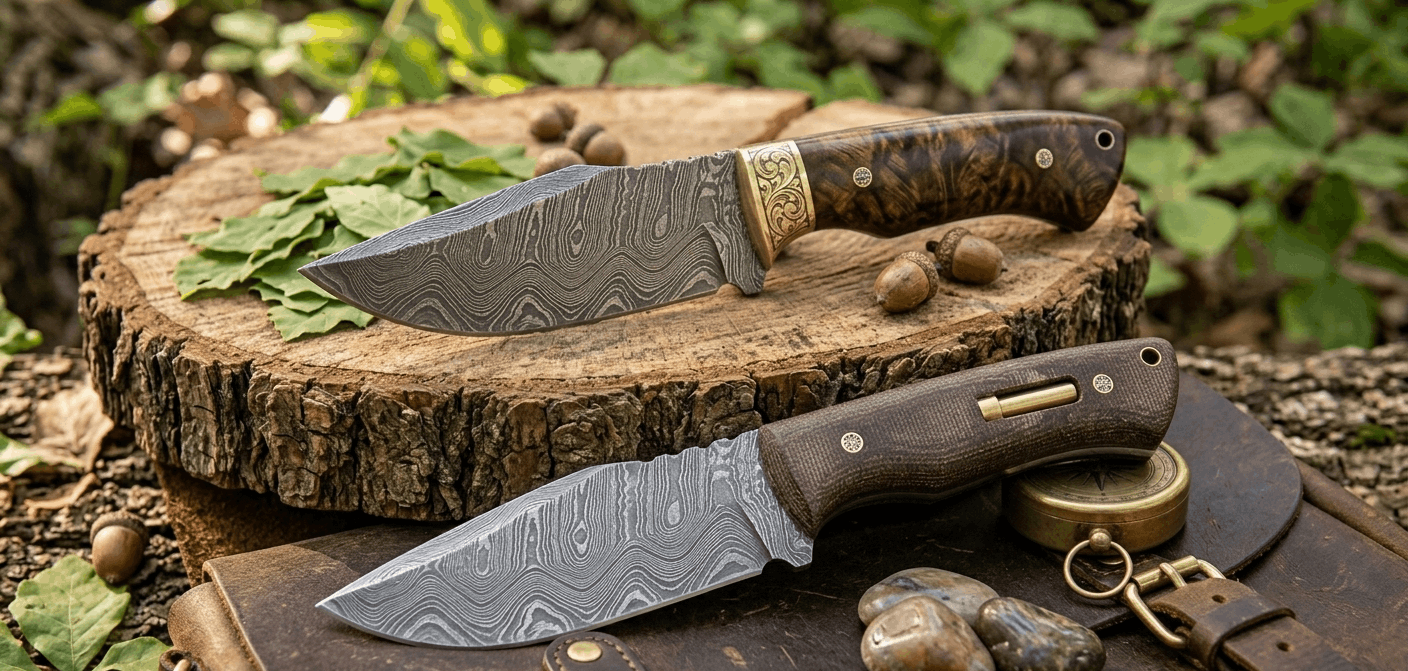
What Makes a Knife a True Bushcraft Knife?
A bushcraft knife is characterized by a few non-negotiable traits. The blade length falls between 3.5 and 5 inches — long enough to perform heavy tasks but short enough for controlled, precise work. The grind is typically a full Scandi (Scandinavian) grind: a flat bevel that runs from the blade spine to the edge with no secondary bevel. This grind makes the knife exceptionally easy to resharpen on a flat stone in the field — a critical quality when you may be days from the nearest hardware store. The spine is left square and sharp, allowing it to throw sparks from a ferro rod for fire-starting. The overall design prioritizes simplicity and function over aesthetics.
An underrated aspect of any bushcraft knife is its sheath. For wilderness use, a well-designed sheath serves as a storage system, carrying a fire steel, small whetstone, or backup blade alongside the knife. Leather sheaths are traditional and attractive but require maintenance in wet environments. Kydex sheaths offer superior moisture resistance and durability but can scratch a blade's finish. Many bushcraft enthusiasts prefer a leather sheath with a stitched-in firesteel loop — a simple, functional configuration that keeps essential fire-starting tools at hand. The sheath attachment system should keep the knife accessible while moving through terrain and secure during climbing or river crossings.
Bushcraft Knife Guide: The Ultimate Wilderness Survival Blade
In the world of bushcraft and wilderness survival, the knife is not just a tool — it is the tool. A skilled bushcrafter can build shelter, process food, carve implements, and start fire armed with nothing more than a quality blade and accumulated knowledge. The bushcraft knife is specifically designed to excel at this broad spectrum of primitive tasks, combining durability, versatility, and ease of sharpening into a single, indispensable package. Understanding what separates a true bushcraft knife from a general-purpose outdoors blade will help you make the right choice before your next adventure.
Steel Choice for Bushcraft: Why High-Carbon Rules
Stainless steel has its place, but among serious bushcrafters, high-carbon steel is almost universally preferred. Steel grades like 1075, 1095, and O1 tool steel achieve a very fine, toothy edge that cuts wood, rope, and food with equal efficiency. High-carbon steel also sharpens quickly on a whetstone — in a few strokes on a leather strop, you can bring a working edge back to razor sharpness. The trade-off is patina and rust without maintenance, but a light coat of oil and proper drying keeps high-carbon blades performing for decades. For bushcraft enthusiasts who want the best of both worlds, modern powder metallurgy steels offer high-carbon-like sharpness with improved corrosion resistance.
Handle Design: Fit, Feel, and Function in the Wild
A bushcraft knife spends hours in your hand, so handle ergonomics matter enormously. Traditional bushcraft knives often feature simple, straight handles made from natural wood — birch, walnut, or stabilized burls — that are warm in cold weather and provide a comfortable, non-slippery grip. Some makers add a slight palm swell or subtle finger grooves for security during heavy use. The handle-to-blade junction should be smooth with minimal gaps where moisture and debris can accumulate. Avoid overly contoured tactical-style handles that restrict grip flexibility — bushcraft work requires shifting grip styles constantly.
A quality bushcraft knife must excel at a demanding list of tasks. Batoning — driving the blade through wood with a stick to split logs — requires a thick spine (3mm or more) and robust construction. Carving and whittling demand a sharp, controllable edge and a blade shape that allows fine detail work. Food preparation, from processing fish and game to cutting vegetables, requires a blade that can be brought to a food-safe sharpness. Fire preparation — processing tinder, carving feather sticks, and striking a ferro rod — tests both the edge and the spine. A true bushcraft knife handles all of these with confidence.
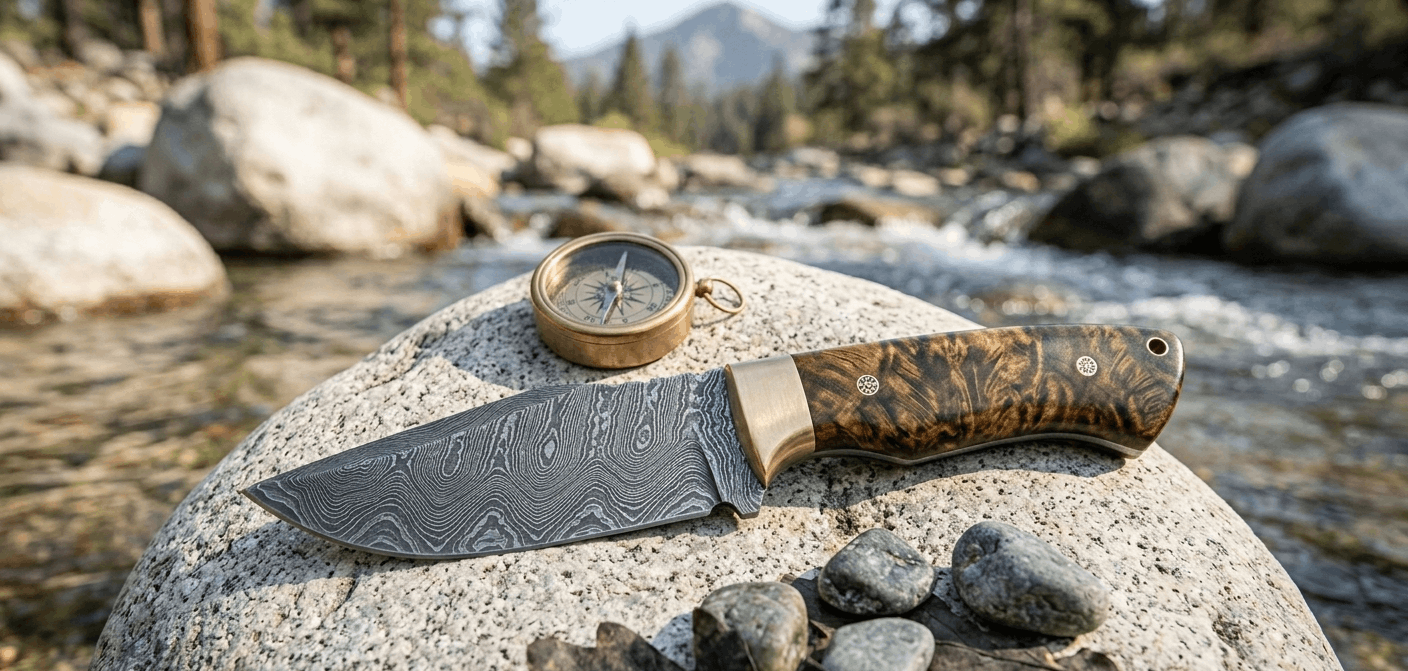
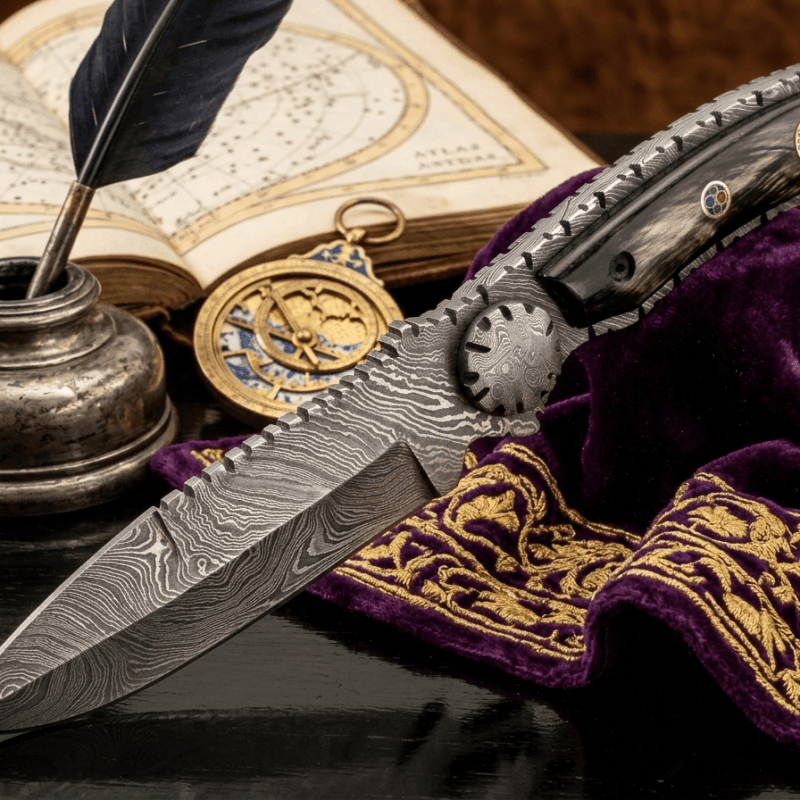
Damascus Steel Fixed Blade Knife | High-Performance Utility
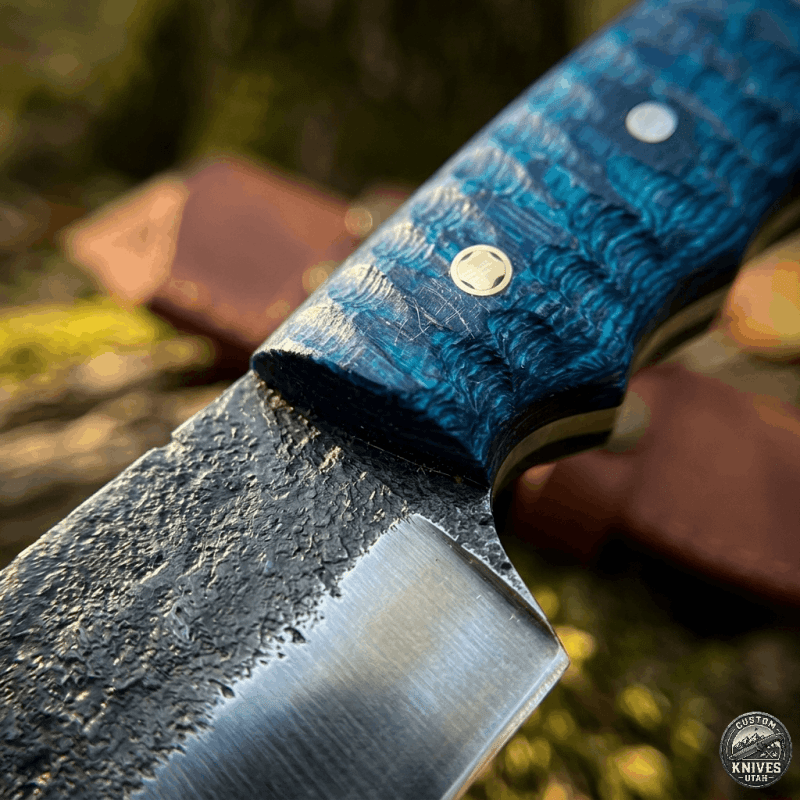
Original price was: $450.00.$320.00Current price is: $320.00.Custom Engraved Blue Blade Knife | Unique Tactical Design
Original price was: $215.00.$185.00Current price is: $185.00.Gold Accented Bowie Knife | Luxury Custom Hunting Blade
Original price was: $210.00.$180.00Current price is: $180.00.
A bushcraft knife is the most intimate relationship between a craftsman and their tools — chosen carefully, used constantly, and maintained with respect. Whether you're learning primitive skills, preparing for backcountry expeditions, or building a collection of functional blades, a high-quality handcrafted bushcraft knife is where to start. Explore our selection of custom fixed-blade knives built for real wilderness work.
Author : John Willie
RELATED POSTS

April 16, 2026