



May 13, 2026
The Legendary Bowie Knife: History, Uses & Buying Guide
November 18, 2025Best Hunting Knives: A Complete Guide for Serious Hunters
March 13, 2026
The Anatomy of the Karambit Blade
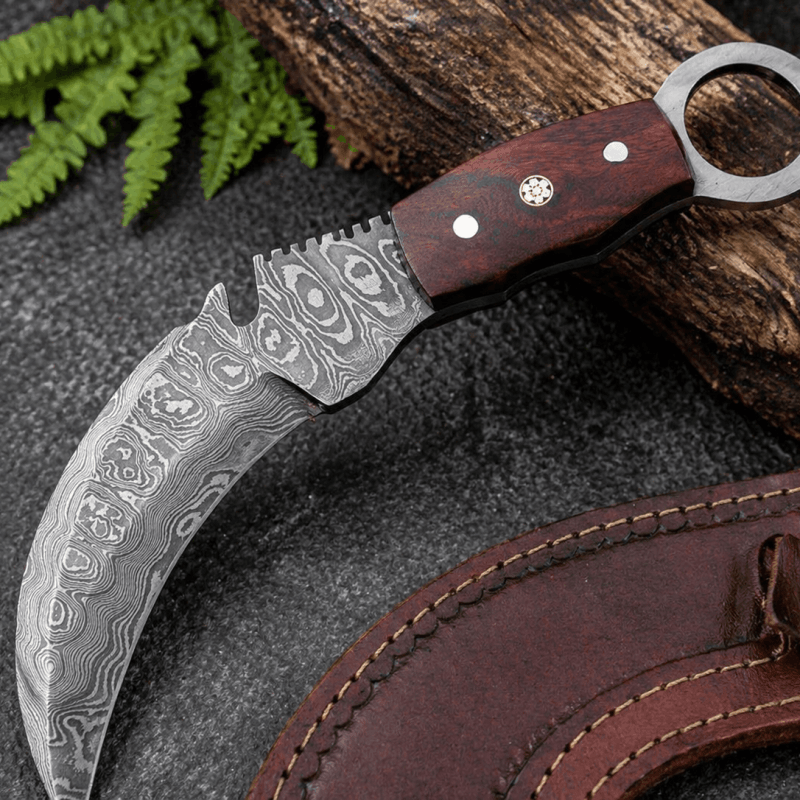
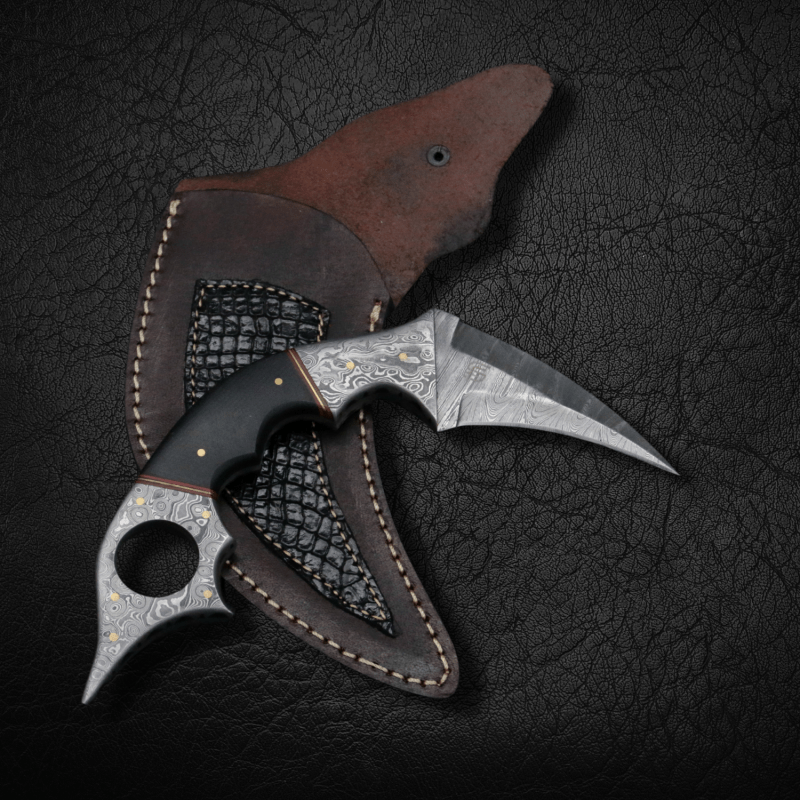
The karambit's defining feature is its dramatically curved blade, which typically sweeps through 90 to 180 degrees of arc. This geometry creates slashing cuts that track along the curve in a manner fundamentally different from straight or mildly curved blades. The finger ring at the base of the handle is equally distinctive — it allows the knife to be held securely even during forceful movements, prevents disarming, and enables fighting techniques unique to this blade type. Fixed-blade karambits are typically smaller than they appear, with blade lengths ranging from 2.5 to 5 inches. Folding karambits bring this capability to an everyday-carry format, retracting the blade safely for pocket carry.
When selecting a karambit, several factors distinguish quality pieces from novelty blades. Steel quality is paramount — look for blade steel with an HRC rating of 57 or higher for adequate edge retention. The finger ring should be sized appropriately for your middle finger: too tight restricts blood flow during extended wear, too loose defeats its retention purpose. The handle's ergonomics should allow multiple grip orientations — edge-up and edge-down — comfortably. For folding models, check the pivot tension and lock-up: the blade should open smoothly and lock with zero blade play. Blade finish matters too — a satin or stonewashed finish shows wear gracefully and reduces glare.
The Ancient Roots of the Karambit
The karambit traces its origins to the Minangkabau people of West Sumatra in Indonesia, where it was developed as an agricultural tool for raking roots and planting rice. The blade's dramatic inward curve mirrors the claw of a tiger — a connection that was eventually codified in the blade's lore as a symbol of ferocity and precision. As the karambit spread across the Malay Archipelago, it transitioned from farm tool to fighting implement, becoming a weapon of the silat martial arts system. Filipino martial arts (FMA) practitioners later adopted and refined the karambit's techniques, spreading its influence throughout Southeast Asia and, eventually, the Western world.
Karambit in Martial Arts and Self-Defense
The karambit's reputation in self-defense circles rests on several genuine advantages. The finger ring provides exceptional retention — the blade cannot be dropped or knocked away easily. The curved blade's cutting geometry generates significant trauma with relatively small movements, relying on technique rather than strength. Filipino Kali and Indonesian Pencak Silat both contain extensive karambit-specific curricula covering drawing, retention, striking, and transitioning between hands. In modern tactical circles, the karambit is valued as a tool for cutting seatbelts, ropes, and restraints with single-handed speed. Law enforcement and military personnel in Southeast Asian nations have carried karambits as backup weapons for generations.
Folding vs. Fixed Blade Karambits
The choice between a folding and fixed-blade karambit largely depends on intended use. Fixed-blade karambits offer superior strength and reliability — there are no pivot mechanisms to fail, and the blade is instantly deployable. They are typically carried in a sheath on the belt, inside the waistband, or at the ankle. Folding karambits trade some of these advantages for significantly improved carry convenience — they clip to a pocket like any other folding knife and deploy via a flipper or thumb stud. High-quality folding karambits use bearing pivot systems for smooth, one-handed opening and locking mechanisms that keep the blade rigidly open under use.
All the knives in the modern blade enthusiast's repertoire, few generate as much fascination — or as many questions — as the karambit. With its dramatically curved blade, finger ring, and Southeast Asian heritage, the karambit occupies a category entirely its own. Originally an agricultural tool from the Indonesian archipelago, the karambit evolved into a martial arts weapon and has since become a fixture in tactical and everyday-carry circles worldwide. Understanding this blade's origins and design philosophy reveals why it has captivated knife enthusiasts across generations and cultures.
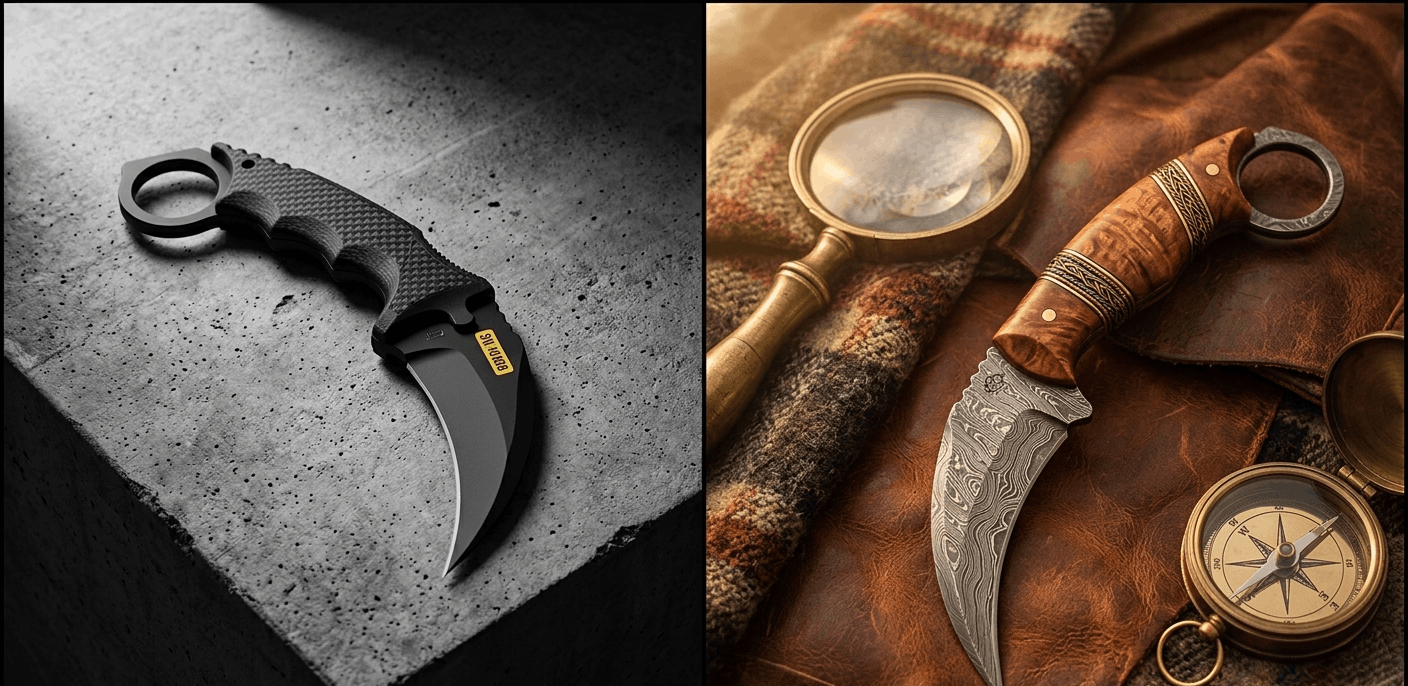
Brown Karambit
Original price was: $250.00.$130.00Current price is: $130.00.
The karambit is a blade with a story that spans centuries and continents, from rice paddies to martial arts dojos to the pockets of everyday-carry enthusiasts worldwide. Its unique design rewards study and practice, offering capabilities unavailable from any other blade geometry. Whether you seek it as a collector's piece, a martial arts training tool, or a capable everyday-carry blade, a quality karambit is a worthy addition to any knife collection.
Author : John Willie
RELATED POSTS

April 25, 2026