

May 13, 2026
Karambit Knife: Origins, Design, and Why This Curved Blade Endures
January 12, 2026Pocket Knife Buying Guide: How to Choose the Perfect EDC Blade
April 16, 2026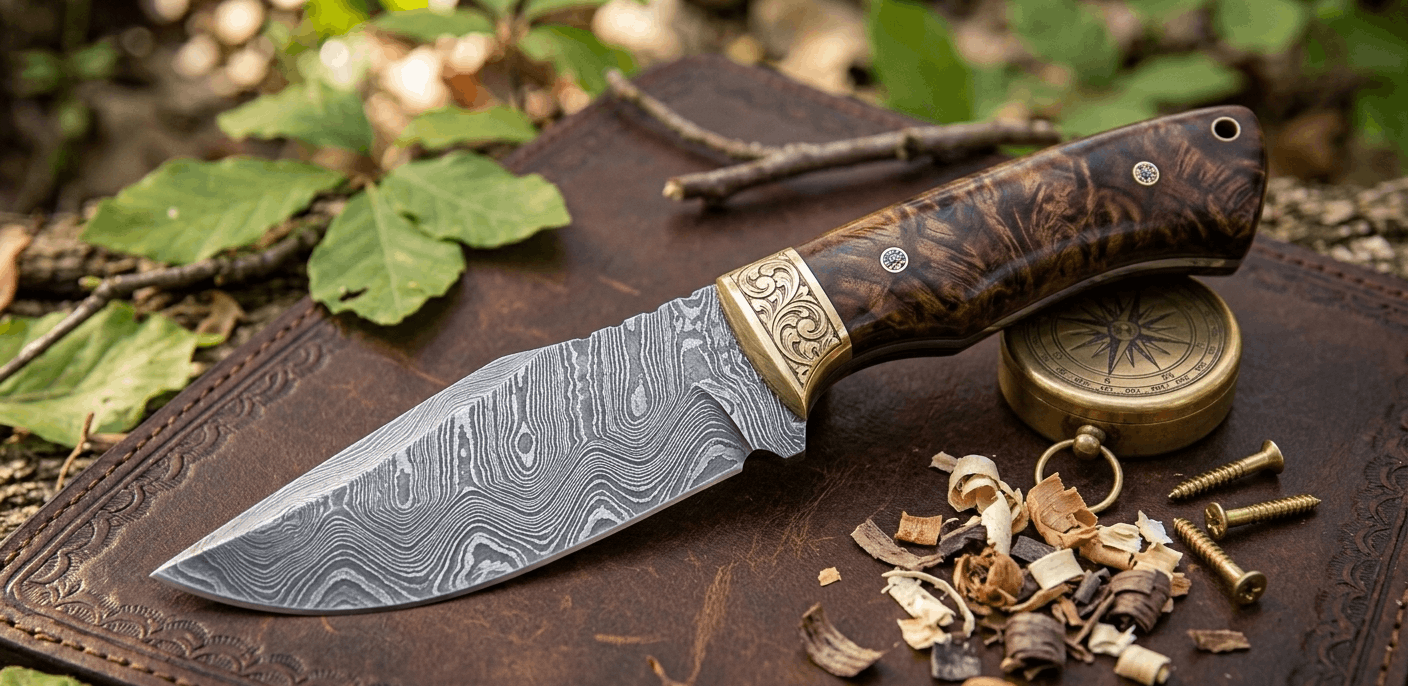
Drop Point vs. Clip Point: The Great Blade Debate
The two most popular blade shapes for hunting are the drop point and the clip point, and each has distinct advantages. The drop point features a convex curve from spine to tip, creating a strong, controllable point that's less likely to pierce organs during field dressing — a critical quality when working on big game. The clip point, made famous by the Bowie knife, has a thinner, more precise tip suited for detailed work and piercing. Hunters who field dress a lot of deer often prefer drop points for their safety margin, while those who use their knife for more varied tasks may lean toward the versatility of a clip point.
Blade steel determines how your hunting knife performs in real-world conditions. High-carbon steel — such as 1095 or the layered compositions used in Damascus blades — takes an extremely sharp edge and is easy to resharpen in the field. Its trade-off is susceptibility to rust if not maintained. Stainless steel, by contrast, resists corrosion admirably, making it forgiving in wet or bloody conditions. Many hunters opt for high-carbon Damascus steel for its superior sharpness and visual appeal, accepting the minor extra maintenance it requires. A Rockwell Hardness rating between 56 and 60 HRC is the sweet spot for hunting use.
Best Hunting Knives: A Complete Guide for Serious Hunters
A hunter without a quality knife is like a carpenter without a hammer. The hunting knife is arguably the most personal piece of gear a hunter carries — it's the blade that performs the essential, hands-on work of the field. From the first incision of field dressing to the final trim of a backstrap, the right hunting knife transforms a difficult task into a satisfying ritual. This guide covers everything you need to choose the perfect hunting knife, whether you're a first-time deer hunter or a seasoned backcountry elk hunter.
Steel Matters: High Carbon vs. Stainless for Hunting
Blade steel determines how your hunting knife performs in real-world conditions. High-carbon steel — such as 1095 or the layered compositions used in Damascus blades — takes an extremely sharp edge and is easy to resharpen in the field. Its trade-off is susceptibility to rust if not maintained. Stainless steel, by contrast, resists corrosion admirably, making it forgiving in wet or bloody conditions. Many hunters opt for high-carbon Damascus steel for its superior sharpness and visual appeal, accepting the minor extra maintenance it requires. A Rockwell Hardness rating between 56 and 60 HRC is the sweet spot for hunting use.
Fixed Blade vs. Folding Hunting Knife
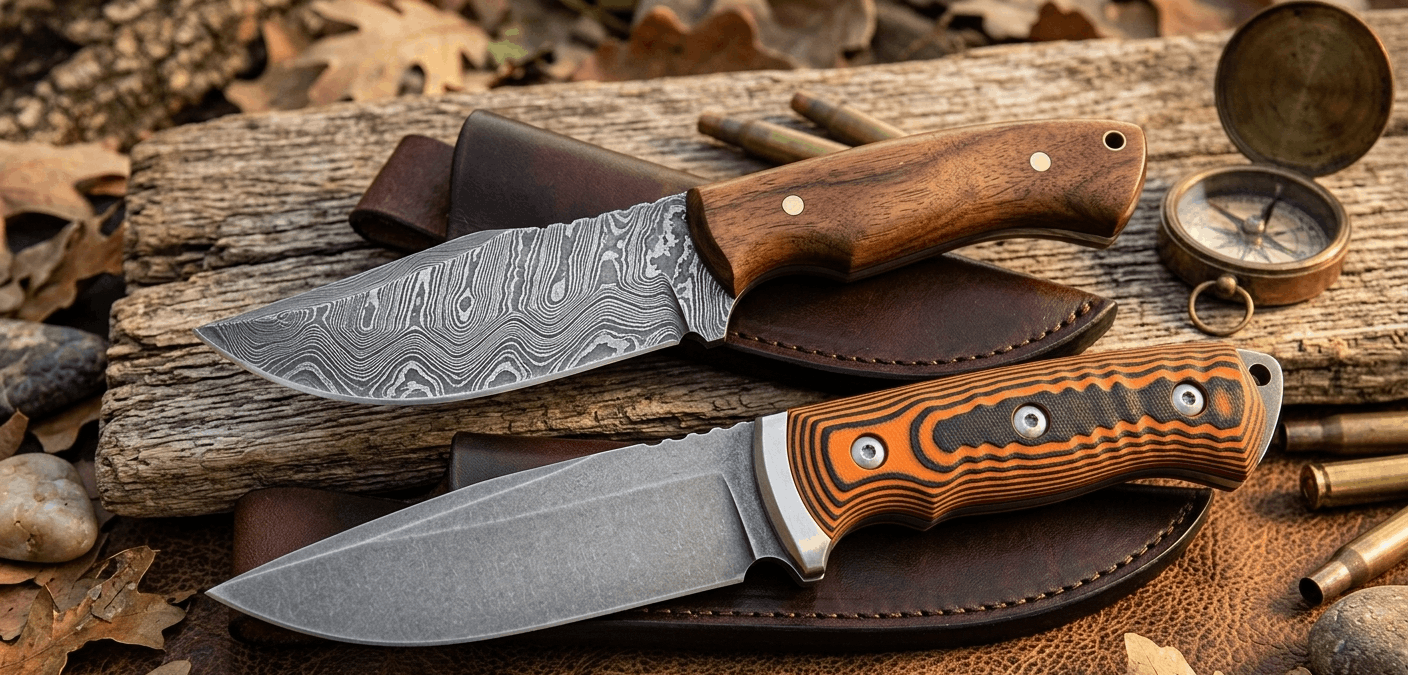
Fixed blade knives are the gold standard for serious hunting. They offer greater strength, are easier to clean, and have no moving parts to fail in cold, wet, or bloody conditions. A 4- to 6-inch fixed blade with a full tang construction is the workhorse of the hunting world. Folding hunting knives offer portability — they slip into a pocket and are legal to carry in more places — but they cannot match the structural integrity of a fixed blade under heavy use. For most hunters, the ideal kit includes a larger fixed blade for field dressing and a smaller folding knife for fine detail work.
When your hands are cold, wet, and covered in blood and fat, handle grip becomes a life-or-death quality. Look for handles with a textured surface — whether checkered G10, contoured rubber, or natural materials like stabilized wood or bone — that maintain purchase even when slippery. The handle shape should fill your hand comfortably without fatigue during extended use. A finger guard or contoured guard prevents your hand from sliding onto the blade during hard cuts. Stag horn and genuine bone handles remain popular among traditional hunters for their beauty, warmth, and surprisingly good grip.
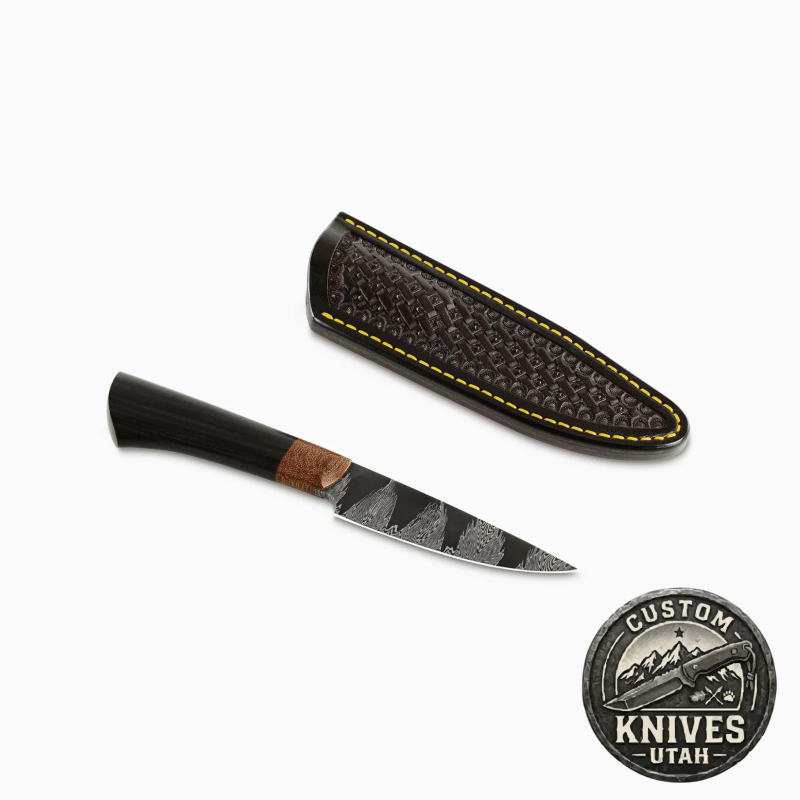
Custom Damascus Hunting Knife | Personalized Outdoor Tool
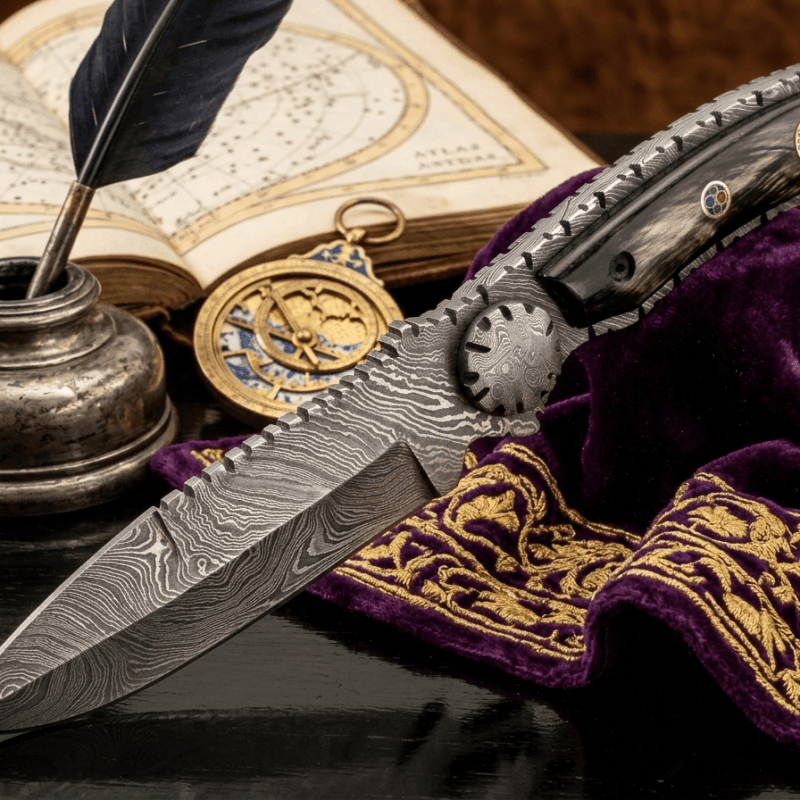
Original price was: $225.00.$199.00Current price is: $199.00.Damascus Steel Fixed Blade Knife | High-Performance Utility
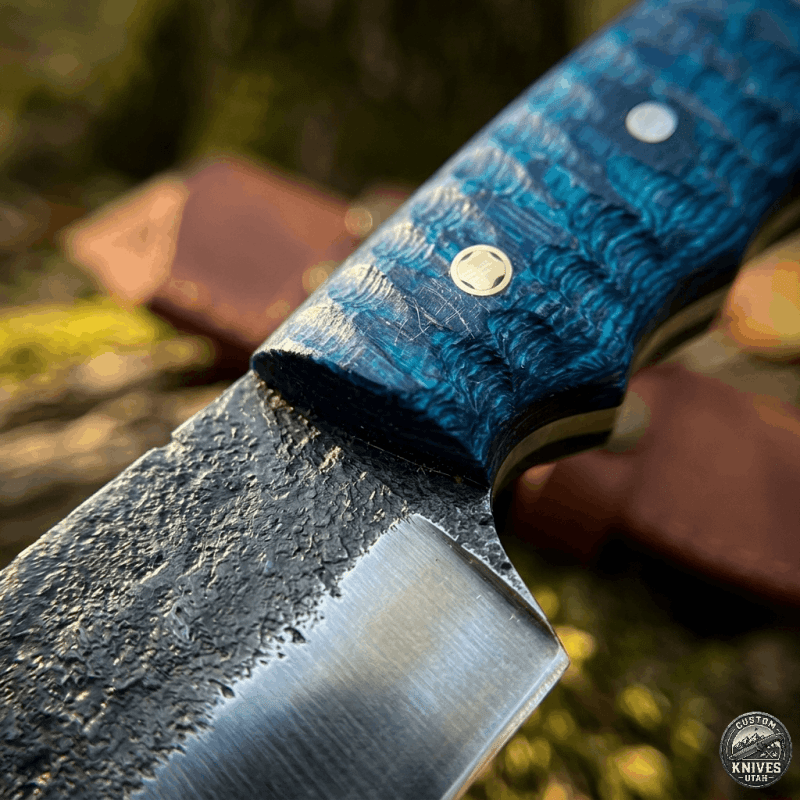
Original price was: $450.00.$320.00Current price is: $320.00.Custom Engraved Blue Blade Knife | Unique Tactical Design
Original price was: $215.00.$185.00Current price is: $185.00.
The perfect hunting knife is the one that fits your hand, suits your quarry, and holds an edge when you need it most. Investing in a handcrafted hunting knife — forged from premium steel and fitted with a handle built for real field conditions — is one of the best decisions any serious hunter can make. Browse our selection of custom hunting knives, each crafted by American bladesmiths who understand what happens after the shot.
Author : John Willie
RELATED POSTS

April 25, 2026