


May 13, 2026
Pocket Knife Buying Guide: How to Choose the Perfect EDC Blade
April 16, 2026Bushcraft Knife Guide: The Ultimate Wilderness Survival Blade
May 13, 2026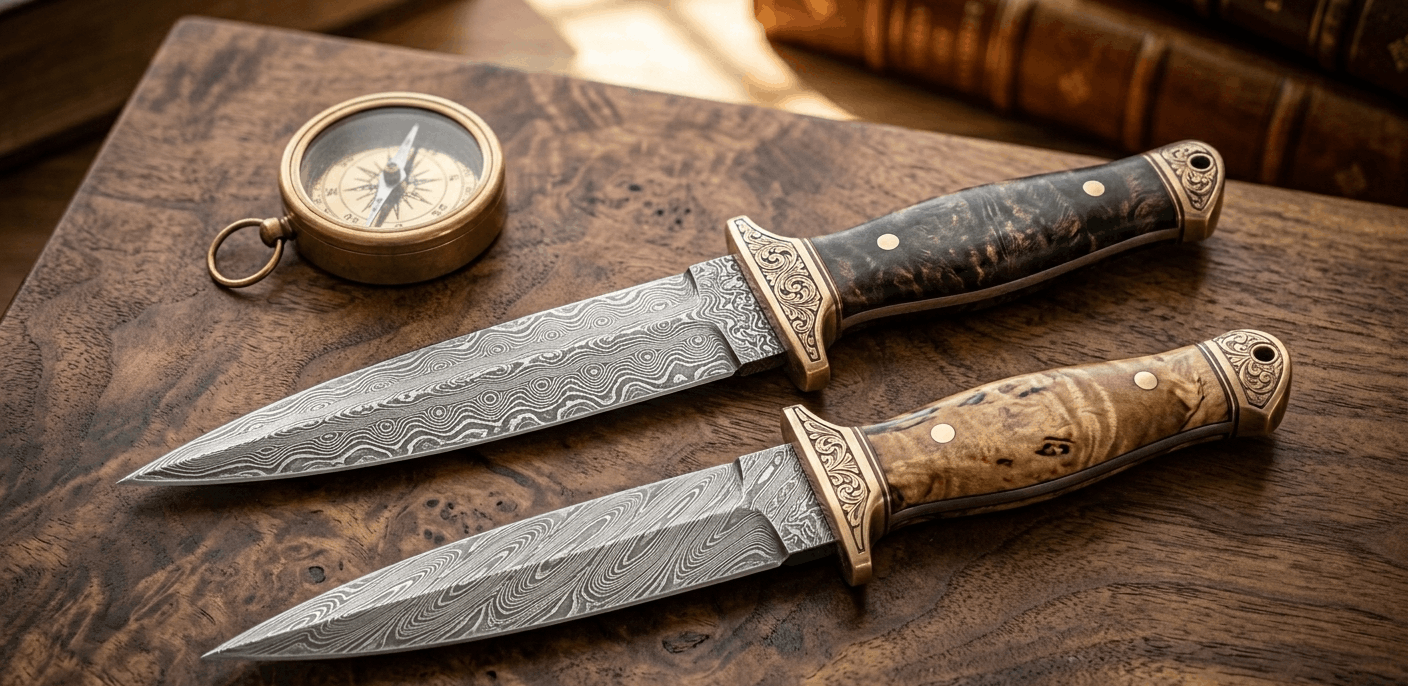
What Defines a True Dagger?
A dagger is defined by a specific set of characteristics that distinguish it from other knife types. The blade is symmetrical — double-edged on both sides, tapering to a central point. This geometry optimizes the dagger for thrusting and piercing rather than slicing or chopping. The blade length is typically between 6 and 12 inches. Most daggers feature a crossguard to protect the hand, and many historic examples incorporate ornate pommels that balance the blade and add visual weight. Unlike hunting or utility knives, the dagger's design is fundamentally aggressive — it is engineered for combat, even when produced purely as a collectible today.
For contemporary collectors and enthusiasts, the dagger world offers remarkable variety. Art daggers are functional blades elevated to sculptural status — featuring Damascus steel blades with complex patterns, handles of fossil ivory or exotic wood, and fittings of engraved silver or gold. Tactical daggers incorporate modern materials like G10 handles and high-performance steel while maintaining the classic double-edged profile. Boot daggers are compact, concealable blades traditionally carried as backup weapons. Fighting daggers, like the WWII-era Fairbairn-Sykes fighting knife, represent a functional peak in combat blade design. Each category rewards study and offers distinct collecting opportunities.
The Dagger: History, Design, and the Art of Collecting Double-Edged Blades
The dagger is one of humanity's oldest and most iconic bladed weapons. Symmetrical, double-edged, and sharply pointed, the dagger has been carried by warriors, noblemen, assassins, and ceremonial guardsmen across virtually every culture and civilization in recorded history. Today, fine daggers occupy a special place in the world of custom knife collecting — they are expressions of bladesmithing artistry, historical scholarship, and the enduring human relationship with the blade. Whether you're drawn to a medieval rondel dagger, a push dagger, or a contemporary art dagger, this guide will deepen your appreciation for one of history's most elegant weapons.
A Journey Through Dagger History
Daggers appear in the archaeological record as early as the Stone Age, when flint was knapped into double-pointed blades for close combat. Bronze Age daggers from Mesopotamia and Egypt were already recognizably similar to modern designs. Medieval Europe produced remarkable variations — the rondel dagger, with its disc-shaped guard and pommel, was a knight's last resort when his sword was broken or lost. Renaissance Italy birthed the stiletto, a narrow, armor-piercing blade designed for a single function: penetrating the gaps in plate armor. In 17th-century Scotland, the ornate dirk became a cultural symbol of Highland identity. Each era's daggers reflect the materials, enemies, and values of their time.
Damascus Steel Daggers: The Pinnacle of Bladesmithing Art
Among all dagger types, Damascus steel examples command the greatest admiration. Pattern-welded Damascus — created by forge-welding multiple steel alloys, folding them repeatedly, and acid-etching to reveal the resulting pattern — produces blades of extraordinary visual complexity. Each Damascus dagger is unique: the pattern of swirling lines, rosettes, or ladder patterns emerges from the bladesmith's specific folding technique and cannot be exactly replicated. The functional qualities of Damascus steel — excellent edge retention, a combination of hardness and toughness from dissimilar steels — make it as practical as it is beautiful. A handcrafted Damascus dagger is simultaneously a weapon, a sculpture, and a technical achievement.
When building a dagger collection, several factors determine quality and long-term value. Balance is paramount — a well-made dagger should balance near the guard, feeling alive and responsive in the hand rather than blade-heavy or handle-heavy. Symmetry of the blade grind should be precise when viewed from the tip; uneven bevels indicate inconsistent craftsmanship. The guard and pommel should be fitted tightly with no movement or gaps. Handle material should be secured in a way that prevents loosening over time — through-bolts, epoxy, and proper handle pins all contribute to longevity. For Damascus examples, look for deep, well-defined patterns that extend through the blade rather than sitting only on the surface.
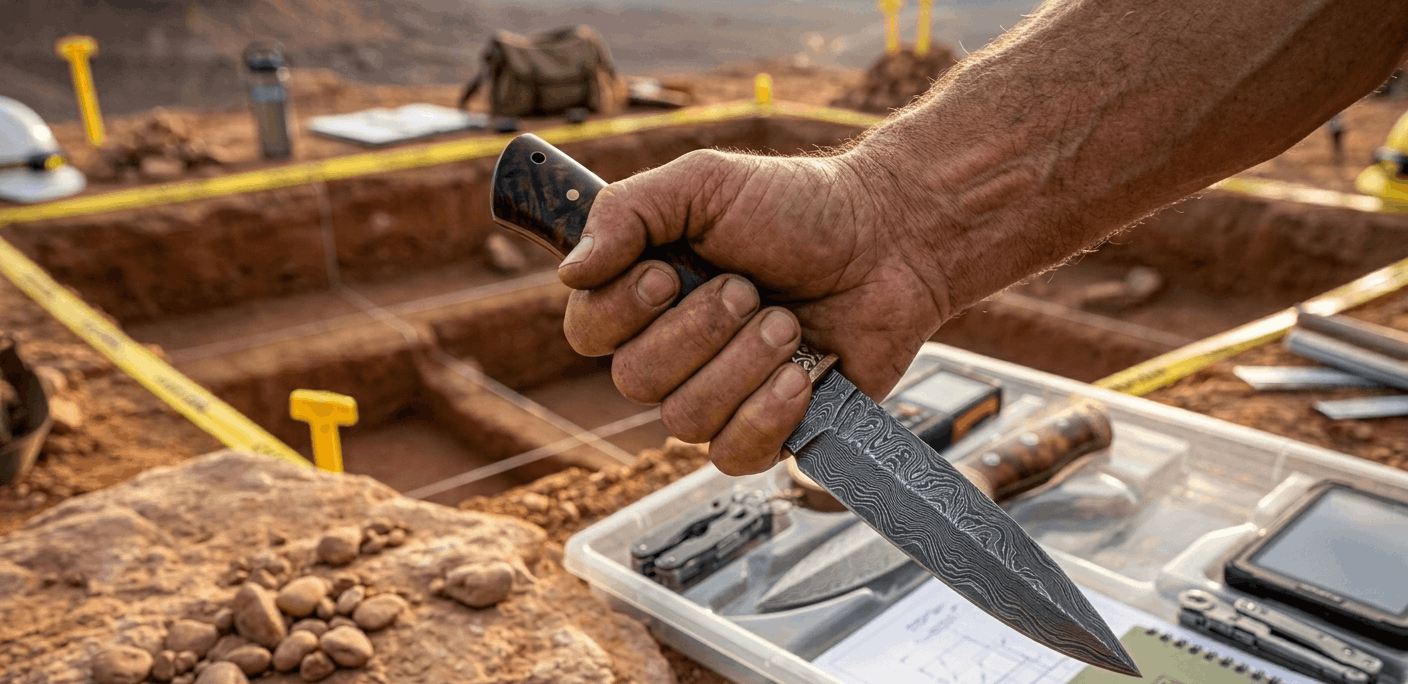
The dagger's enduring appeal lies in its perfect contradiction: a blade built for aggression, refined into an art form. For collectors, the search for a truly exceptional dagger — one that combines historical resonance, technical mastery, and visual beauty — is one of the most rewarding pursuits in the knife world. Browse our selection of handcrafted daggers, each a unique expression of the bladesmith's art.
Author : John Willie
RELATED POSTS

April 16, 2026