

The Forge & Anvil: How Our Custom Knives Are Made
At Custom Knives Utah, we don't just assemble knives; we forge companions for the wild, tools for the everyday, and heirlooms for the future. Whether you are carrying one of our rugged cowboy knives, a precision tanto, a versatile pocket knife, or a striking Damascus hunting blade, the journey of your knife begins long before it reaches your hands.
Material Selection & Design
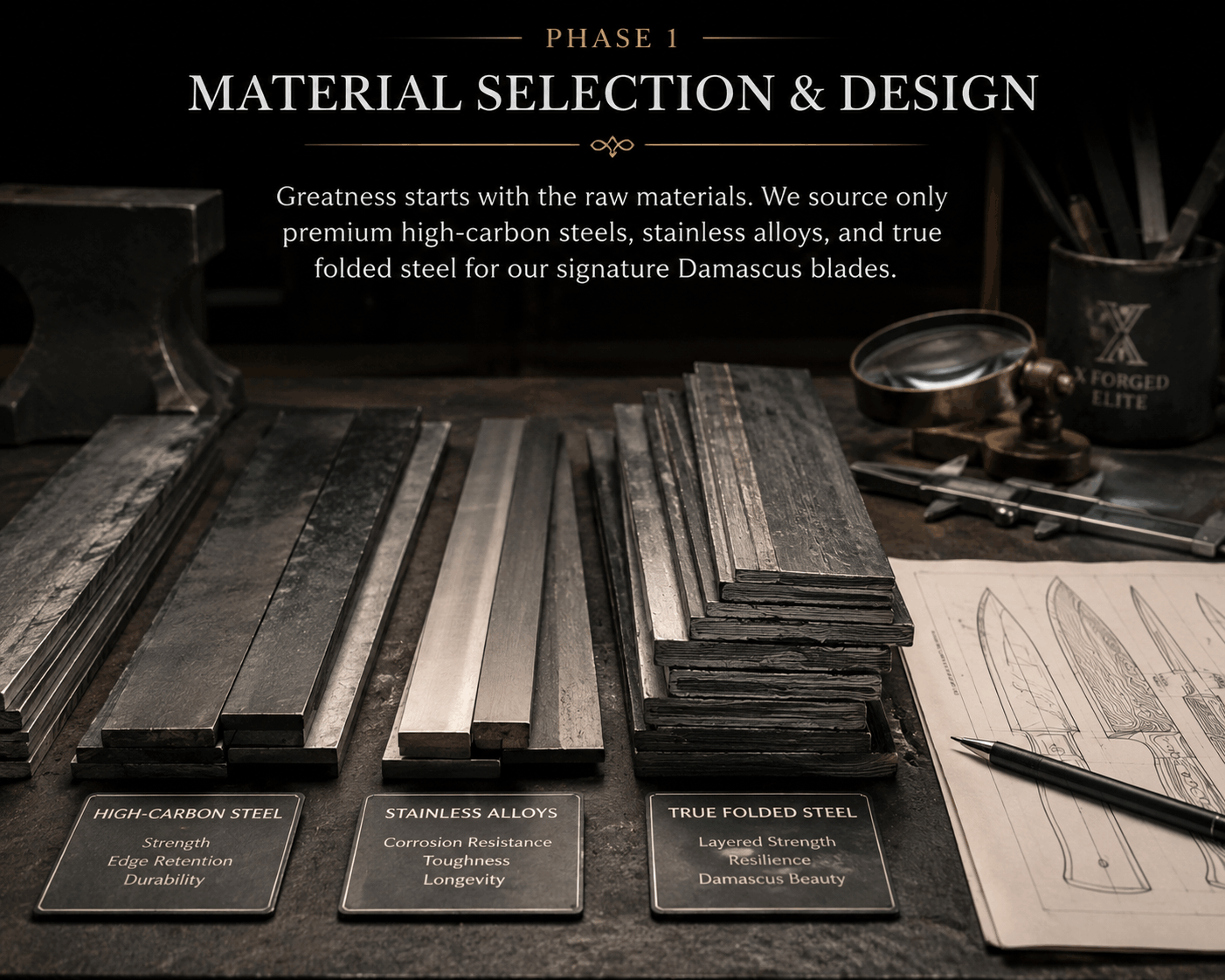
Greatness starts with the raw materials. We source only premium high-carbon steels, stainless alloys, and true folded steel for our signature Damascus blades.
-
The Blade: Depending on the knife's purpose be it a heavy-duty hunting knife or a sleek tactical tanto—we select the steel that offers the perfect balance of edge retention, toughness, and corrosion resistance.
- The Handle: A blade is only as good as its grip. We curate a selection of premium handle materials, including exotic hardwoods, durable Micarta, rugged G10, and classic bone or horn, ensuring a perfect ergonomic and aesthetic fit.
Forging & Profiling
-
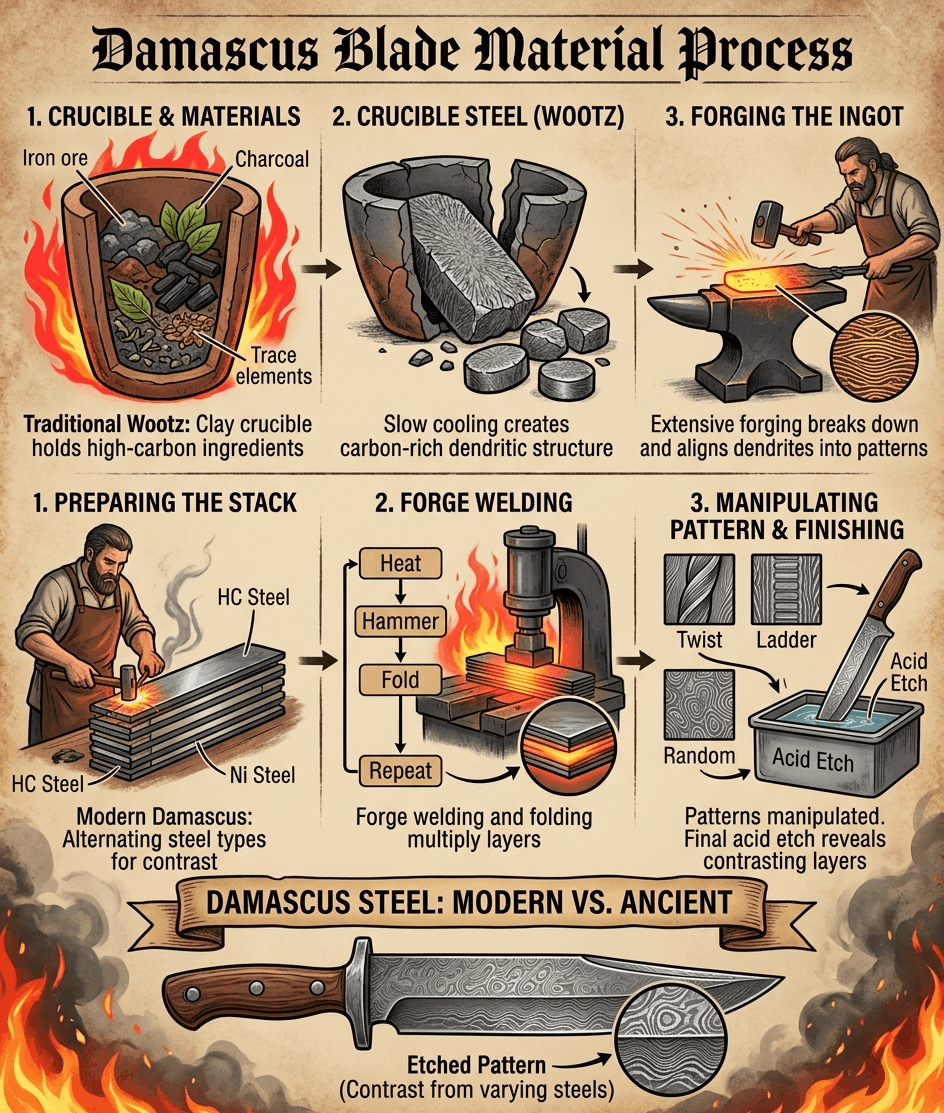
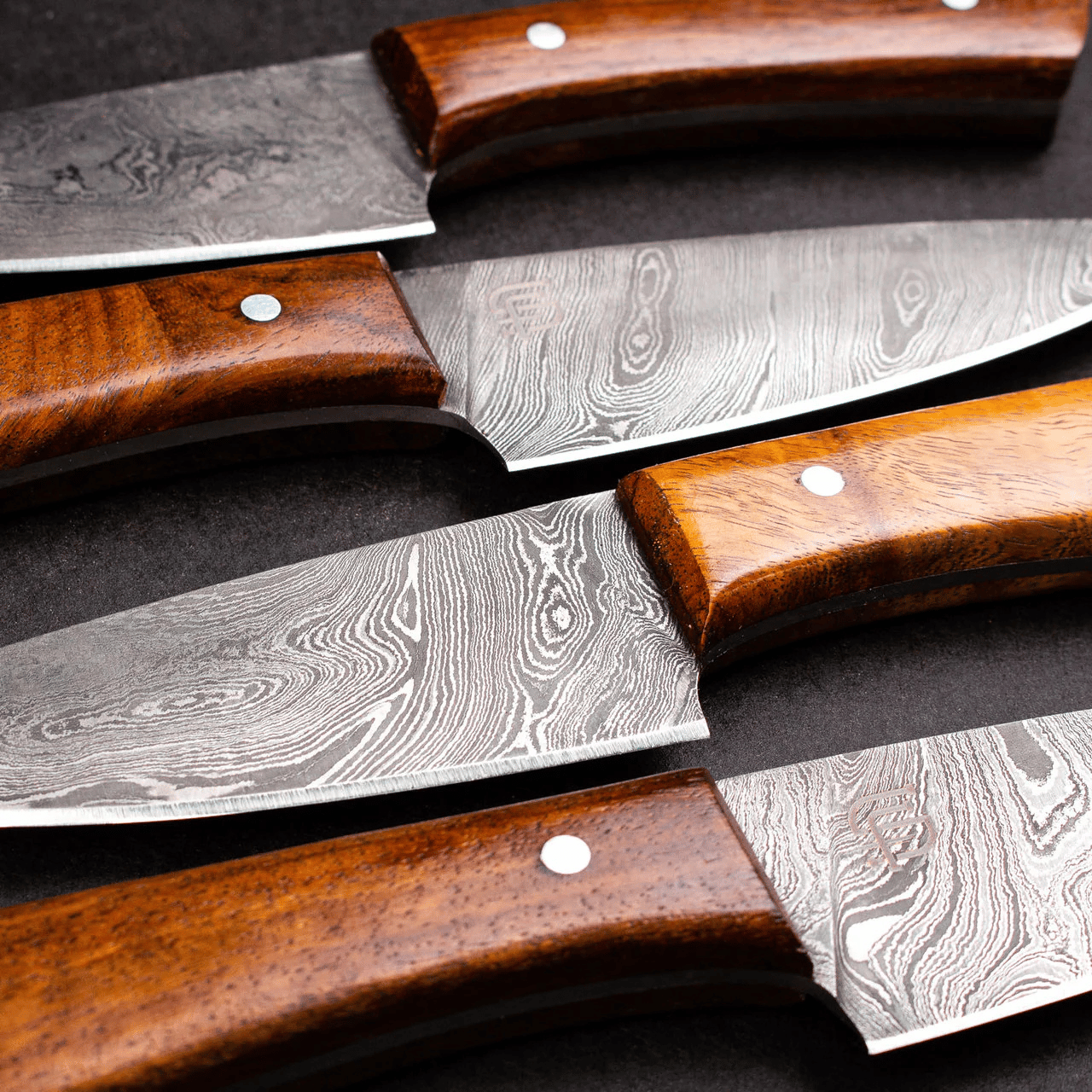
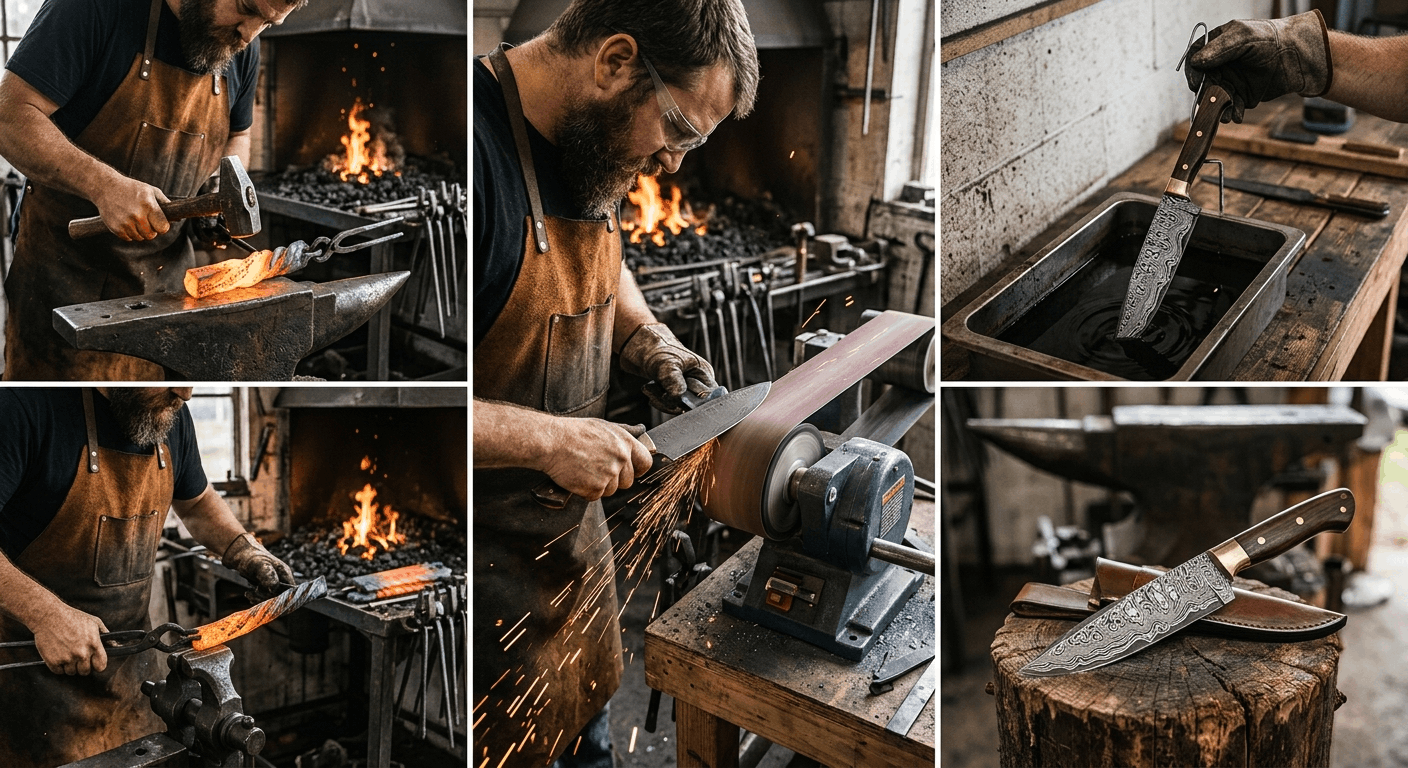
Heating & Hammering: For our forged blades, the steel is heated to critical temperatures and shaped on the anvil. For our Damascus blades, this involves the rigorous process of forge-welding, folding, and drawing out the steel to create those distinctive, mesmerizing water-like patterns.
- Profiling: The raw billet is then cut and profiled into its foundational shape. This is where the distinct geometry of a cowboy clip-point or the sharp, angular geometry of a tanto begins to emerge.
Grinding & Beveling
This step requires an incredibly steady hand and years of experience. We use precision belt grinders to establish the blade's bevels.
- We carefully remove material to taper the blade down to its cutting edge, dictating how the knife will perform.
- A hunting knife requires a different edge geometry than a folding pocket knife, and our craftsmen expertly grind each piece to suit its exact intended use.
Heat Treatment & Tempering
A knife without proper heat treatment is just a piece of metal. This is the most critical step in our entire process.
- Hardening: The profiled blades are heated in a temperature-controlled kiln until they become non-magnetic, then rapidly quenched in specialized oil. This hardens the steel, locking its crystalline structure into place.
- Tempering: Because fully hardened steel is brittle, we immediately bake the blades at a lower temperature to relieve internal stress. This "tempering" process gives the blade its essential flexibility and toughness, ensuring it will hold a razor-sharp edge without chipping in the field.
Acid Etching
For our custom Damascus knives, the tempered blade is submerged in an acid bath. The acid reacts differently to the various layers of folded high-carbon and nickel steels, darkening some while leaving others bright. This reveals the beautiful, high-contrast pattern hidden within the metal.
Handcrafting & Fitting the Handle
- The chosen scales (wood, bone, or synthetic) are epoxied and pinned to the tang of the knife.
- Our craftsmen then hand-shape the handle on slack belts and refine it with hand-sanding. We meticulously contour the handle until it melts into the hand, providing a secure, comfortable grip that feels like an extension of your arm.
Final Polish
- We take the edge down to a microscopic apex using a progression of fine sharpening belts and hand stones.
- After a final leather stropping, the blade is tested to ensure it possesses a terrifyingly sharp, hair-shaving edge. The knife is then cleaned, oiled, and polished to a flawless finish.
Built for the Journey Ahead
From the initial spark in the forge to the final polish, every custom knife we produce is a testament to the art of blade-smithing. Whether it's a trusty pocket knife for daily tasks or a Damascus hunting blade for your next big expedition, you can trust the steel in your hand.