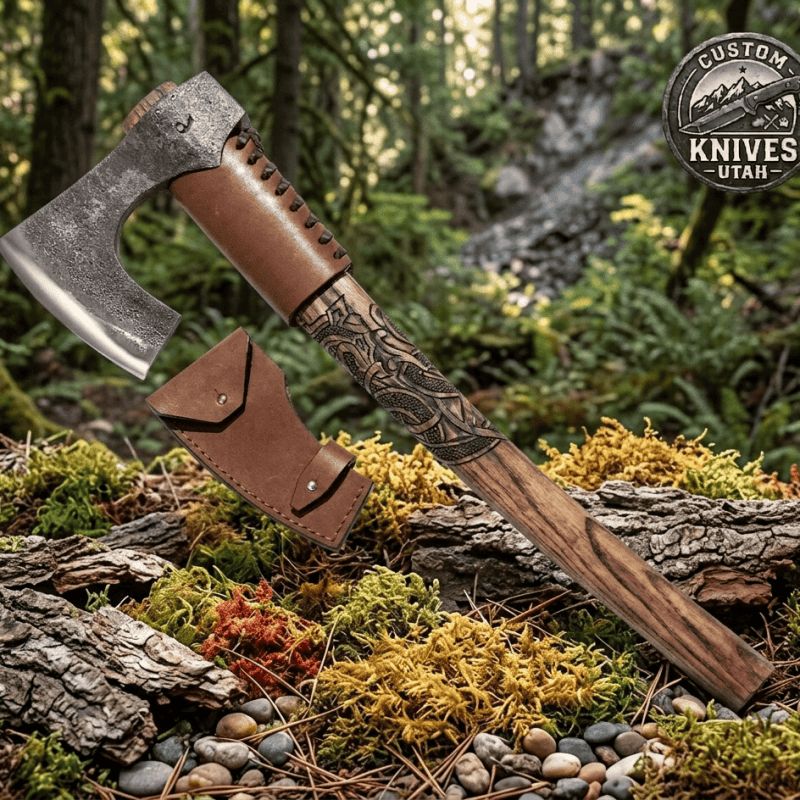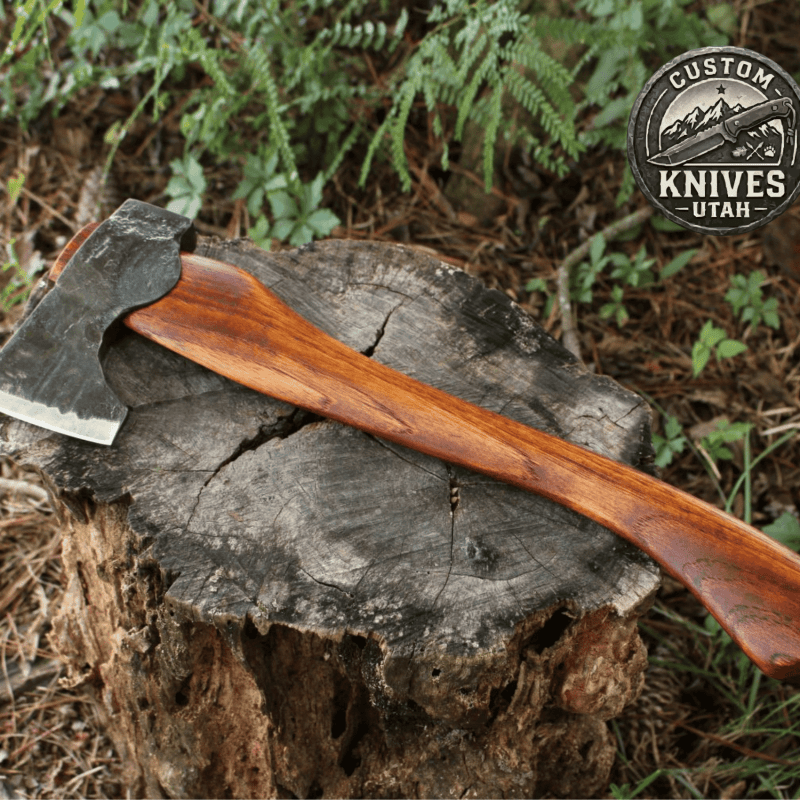


Custom Knives Utah - AXE
Whether you’re preparing firewood, clearing trails, or handling demanding fieldwork, a well-balanced axe provides the strength and confidence needed to get the job done safely and effectively.
Axes - The Original All-Purpose Tool, Built to Last a Lifetime
A Brief History of the Axe
The axe holds the distinction of being one of humanity's oldest tools — stone hand axes date back over 1.5 million years to the Lower Palaeolithic era. As metallurgy advanced, axes evolved from crude stone heads into finely shaped bronze, iron, and eventually high-carbon steel tools capable of extraordinary precision and durability. Across every major civilisation — Viking, Norse, Native American, medieval European — the axe served as weapon, woodworking instrument, and survival essential. Today's modern axes are the culmination of millennia of refinement, combining traditional forging methods with contemporary steel technology and ergonomic handle design.
Few tools command as much raw authority as a well-made axe. From ancient battlefield weapon to essential camp companion, the axe has been a cornerstone of human civilisation for over 1.5 million years. Whether you're splitting firewood, clearing trail, building shelter, or adding a heritage piece to your collection — the right axe makes every task feel powerful and precise.
How to Sharpen an Axe
A sharp axe is a safe axe a dull head bounces unpredictably and demands more force. For field sharpening, a puck-style whetstone or a diamond file works well on most axe bits. Work in circular motions along the bevel on each side, maintaining the original edge geometry. For a finer, longer-lasting edge at home, use a bench stone or belt grinder followed by a leather strop loaded with stropping compound. Aim for a convex bevel rather than a flat grind, it is stronger under impact and resists chipping far better through hard wood and knots.
Shop Axes, Hatchets, Felling Axes, Splitting Mauls & More
Our axe collection brings together the world's finest hand-forged and production axes from compact camp hatchets and Viking-style throwing axes to heavy splitting mauls and precision carpenter's axes. Each piece is selected for steel quality, handle craftsmanship, and field-proven performance. Whether you're a woodsman, a homesteader, a collector, or just getting started find your perfect axe here.
The head may be steel, but the handle is what keeps you safe. Inspect the handle before every use for cracks, splits, or looseness at the eye. Sand lightly and apply raw linseed oil to wooden handles two to three times per year to prevent drying and cracking. A well-oiled hickory handle will outlast many modern composite alternatives and only improves with age.
Your Knife, Your Identity.
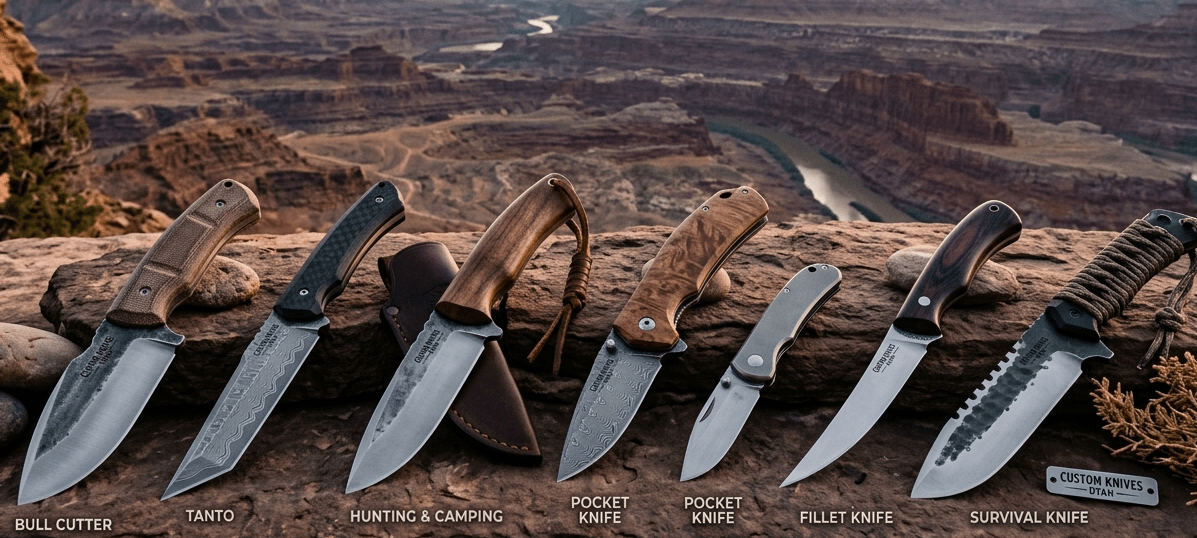
Stand out with custom handles and uniquely designed blades tailored to your needs. From engraved masterpieces to tactical and outdoor essentials, we’ve got it all.
Explore engraved knives, hunting tools, folding blades, tantos, axes and morebuilt exactly the way you want.
Hand-Forged Viking Axe with Hammer Poll | 52100 Carbon Steel
Original price was: $230.00.$195.00Current price is: $195.00.Tracker Bushcraft Axe for Camping | Rugged Outdoor Wood Tool
Original price was: $210.00.$180.00Current price is: $180.00.